The Weight of a Name
In Sanctum, power is not inherited, elected, or divine. It is witnessed. It is spoken. It accumulates in the mouths of strangers.
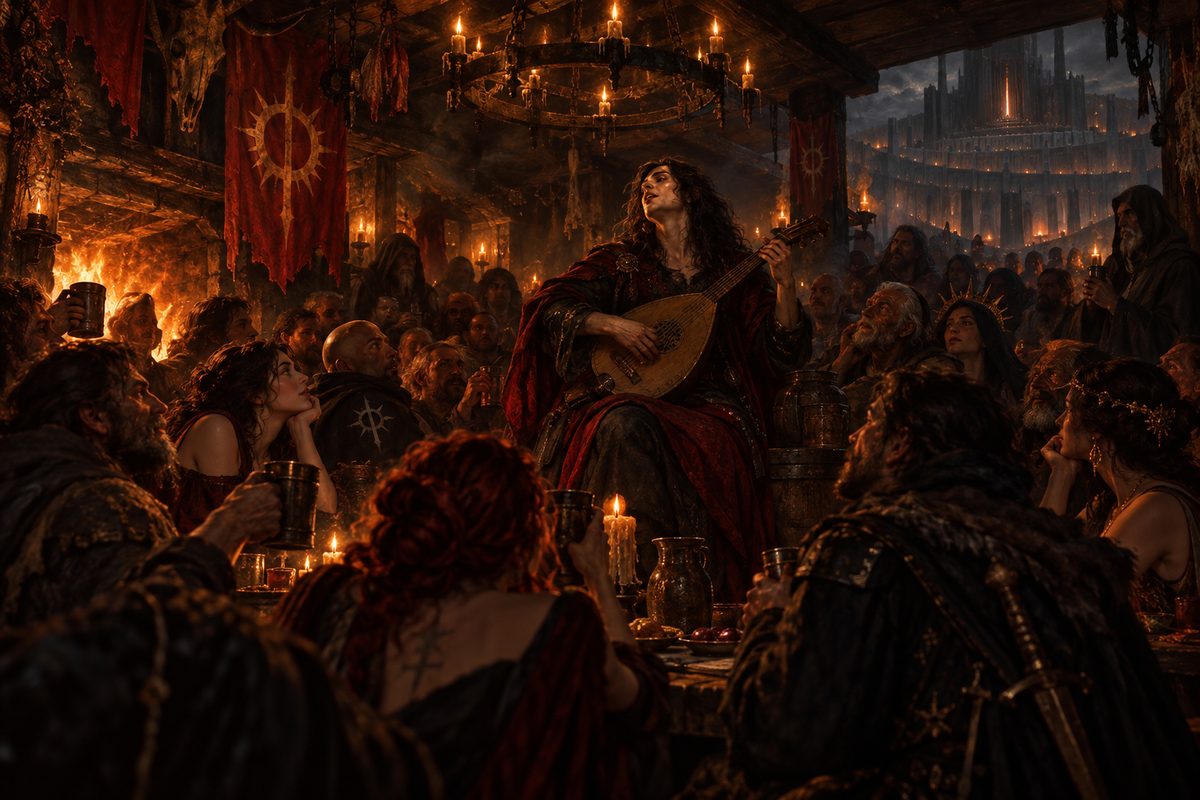
"I do not care if they love me. I care if they remember me in the morning when they are afraid."— Vael Morreth, the Arbiter, God of Contracts
What Renown Is
Renown is the currency of identity in Sanctum. It is not reputation in the moral sense — good people and monsters alike can accumulate it. It is simply the weight your name carries when someone speaks it. A God who heals thousands has Renown. So does a delver who slaughtered an entire faction crew in the Throat and walked out alone. The city doesn't judge the story. It only measures how loudly it's told.
Renown functions as a social force field. High Renown means doors open, people step aside, information reaches you faster, and it becomes harder for your enemies to move against you openly without incurring political cost. Destroying someone with real Renown requires either matching it or working in the dark.
How Renown Grows
Renown grows through witnessed acts. The witness is everything — a heroic deed performed alone in the dark is worth nothing to your name. The same deed performed in front of a crowd, recorded by a Pale Archive scribe, or repeated in three separate taverns by three separate mouths, compounds fast. This is why the Gods hold public ceremonies. Why powerful delvers keep bards on retainer. Why the most dramatic acts in Sanctum always seem to happen somewhere crowded.
Defeating a named enemy. Surviving something that should have killed you. Completing a job three others failed. Being publicly credited — or publicly blamed — for something that mattered.
Speaking in crowded places. Having your name attached to a scandal. A wanted poster. A bounty. Being mentioned by a God — even as a warning. Infamy spreads a name just as well as admiration.
Failing publicly, especially after boasting. Disappearing from the city's attention for too long. Being exposed as a fraud. Being visibly bested by someone with lower Renown than you.
The Gods actively suppress Renown that threatens them. A God can spend resources to discredit or reframe your story. The Pale Archive can decline to record you. The Quiet Current can replace your narrative with a worse one.
The Road to Godhood
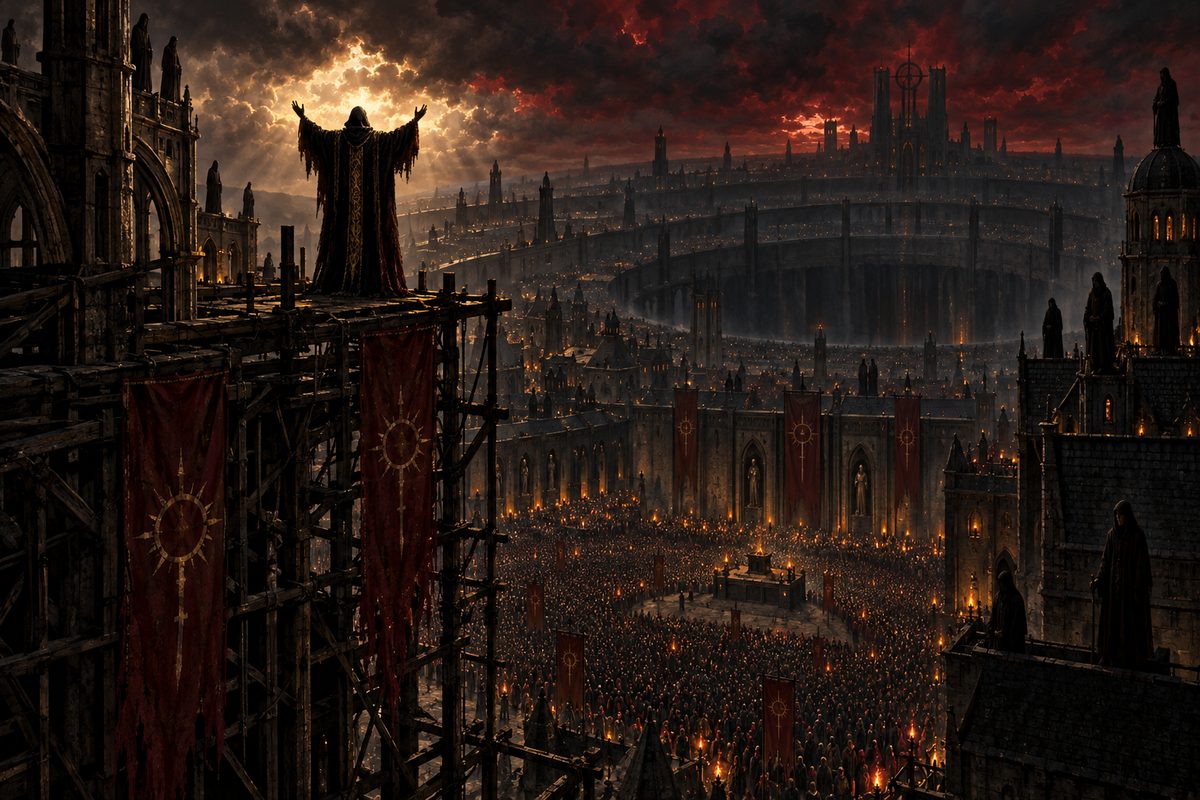
There is no ceremony. No election. No divine threshold. A person becomes a God when their Renown is so substantial that the existing Gods must acknowledge them — because ignoring them has become more costly than recognising them. This acknowledgment usually comes as a confrontation: the other Gods either negotiate a Sphere, challenge the pretender openly, or attempt to destroy them before recognition becomes unavoidable.
In practice, the path looks like this: you do something the city can't stop talking about. Then again. Then again. You build allies, hold debt, establish a base, offer something others need. When enough people are saying your name with real weight behind it, you are a God — whether the others like it or not.
Renown as a God's Weakness
The same mechanism that elevates Gods can unmake them. A God whose story is rewritten — whose miracles are attributed to others, whose failures are amplified, whose name becomes associated with disgrace — loses the social weight that made them untouchable. Debt contracts are legally bound, but Paladins won't risk their lives for a God the city has stopped fearing. Clerics won't perform miracles at cost for a God the city has stopped believing in.
Attacking a God's Renown is therefore the most effective long-term strategy for any rival. Assassins are for emergencies. Narrative destruction is for permanence.
Renown Stops at the Wall
Everything on this page is true inside Sanctum and almost worthless outside it, which is the part new arrivals take longest to accept.
Out in Altair, power is what it has always been: bloodline, title, land, army, and the blessing of a Church that has been in place far longer than this city. Queen Min Raya rules from Gilder by inheritance. Nobody in the kingdom votes with their fear. And under the fifth clause of the Gate Concord, no God of Sanctum may claim title, land or Sphere beyond the walls — divinity here is legally a local phenomenon. A God of Sanctum can own the lives of a hundred thousand people and not lawfully own one field in Hickory Hollow.
Worse, the continent has a word for what Sanctum's Gods are, and the word is heretic. Altair has one goddess. A person who accumulates enough Renown to be called divine has, by Somist doctrine, committed the most public blasphemy available. A Legendary name from the Throat District buys silence in a Mirfield tavern — the useful kind, where nobody wants trouble — and buys nothing at all in a royal court except a note in a file.
Renown Tiers
| Tier | Name Recognition | What It Means In Practice |
|---|---|---|
| Unknown | No one outside your immediate circle has heard of you | No social leverage. Treated as any commoner. You have to explain who you are. |
| Notable | Known in your district or within a single faction | Minor deference. Small favours possible. Low-level jobs start finding you. |
| Infamous | Name recognised city-wide; tied to specific deeds | Doors open and close based on your story. Gods take notice. You stop having to introduce yourself. |
| Legendary | Name recognised beyond Sanctum; your deeds are told as stories | Factions recruit or fear you openly. Gods must respond to you. Commoners invoke your name. Note that "beyond Sanctum" means travellers repeat it — not that Altair honours it. |
| Divine | Name is a social force — spoken to inspire, warn, and invoke | Godhood. You need a Sphere. The other Gods negotiate with you — or try to eliminate you. |