Sanctum, District by District
One city. Five worlds stacked on top of each other, descending toward the one thing that matters.
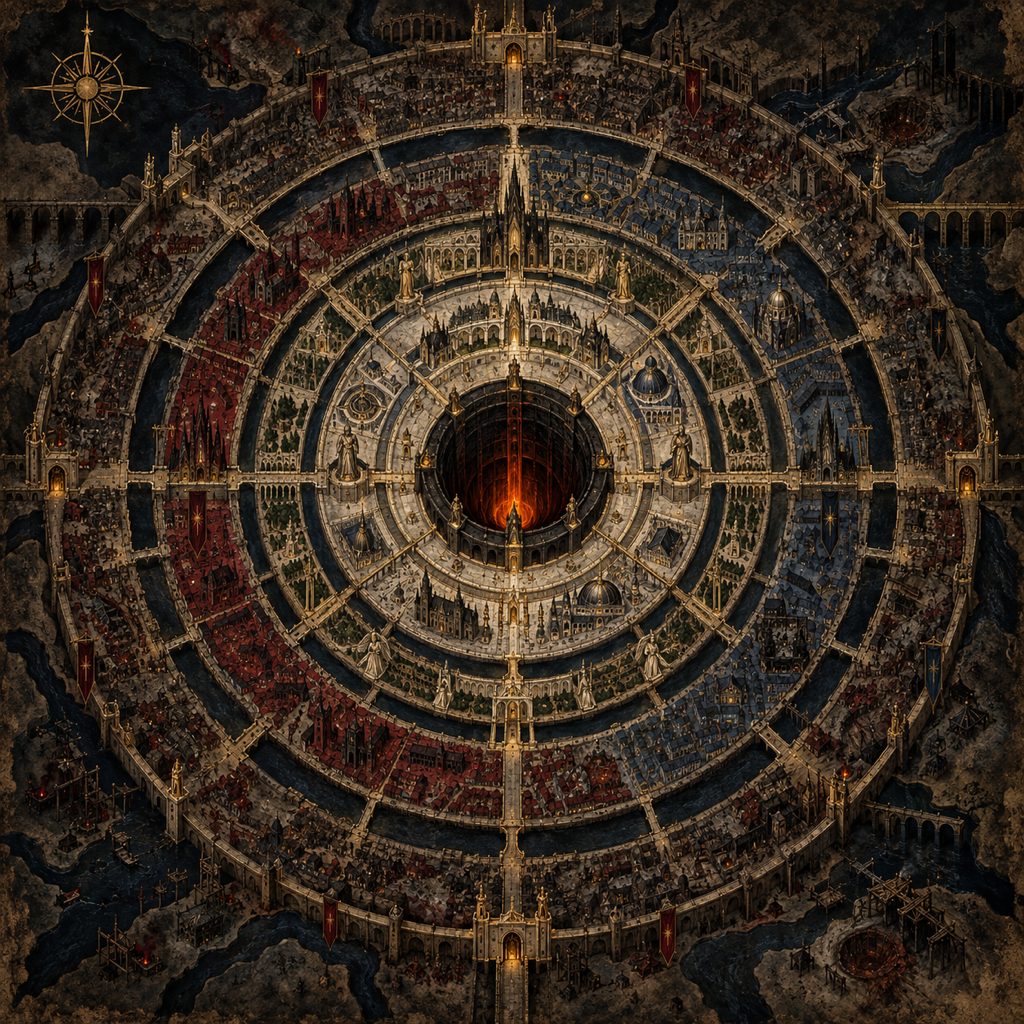
Sanctum sits at the centre of the continent of Altair, a week's ride south of the capital at Gilder, inside a kingdom whose laws stop at its gate. Everything below is what the rings look like from the inside. What the rest of the world sees is a very tall wall.
Layout
Sanctum is built in concentric rings descending toward the Delve entrance at its center. The deeper your ward, the older the architecture, the more contested the territory, and the closer you are to the source of everything that matters in this city.
The Spire District
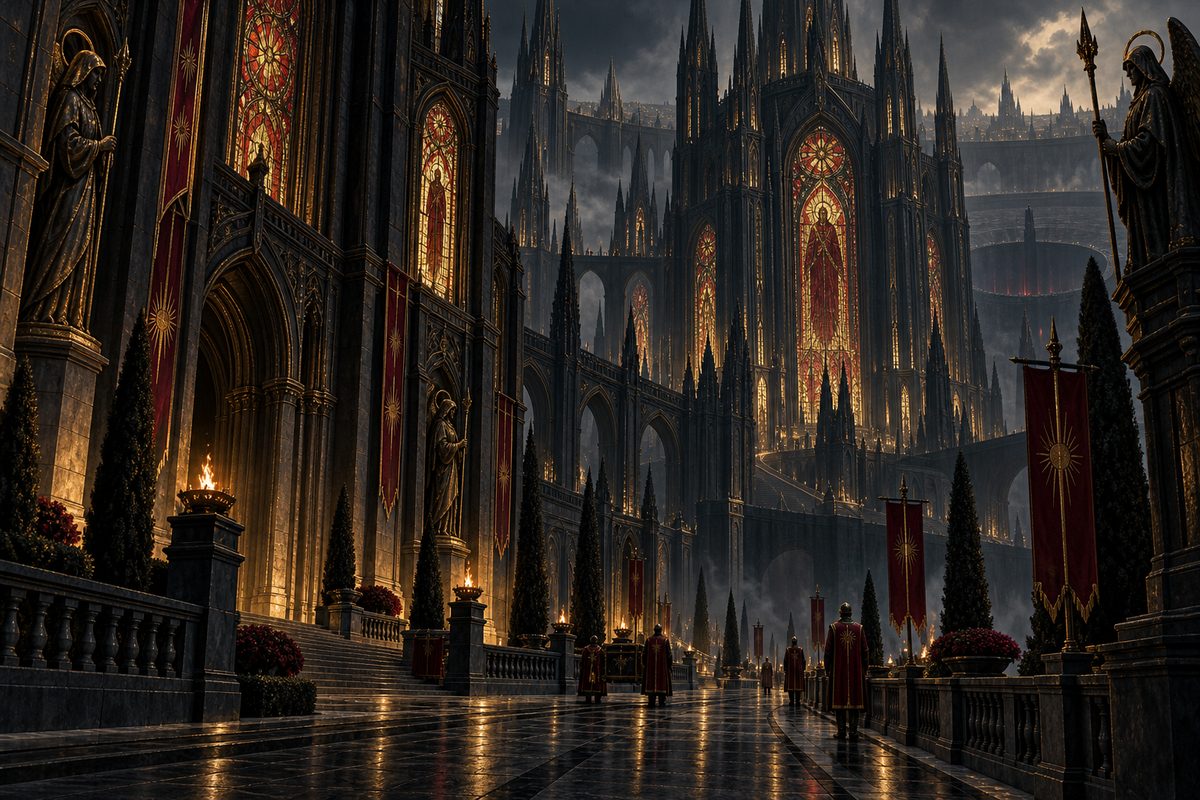
Where Gods hold court. Towers of stone and stained glass. Servants everywhere. No public access without appointment or invitation. The air smells of incense and money. Miracles are priced here, not performed.
The Covenant Ring
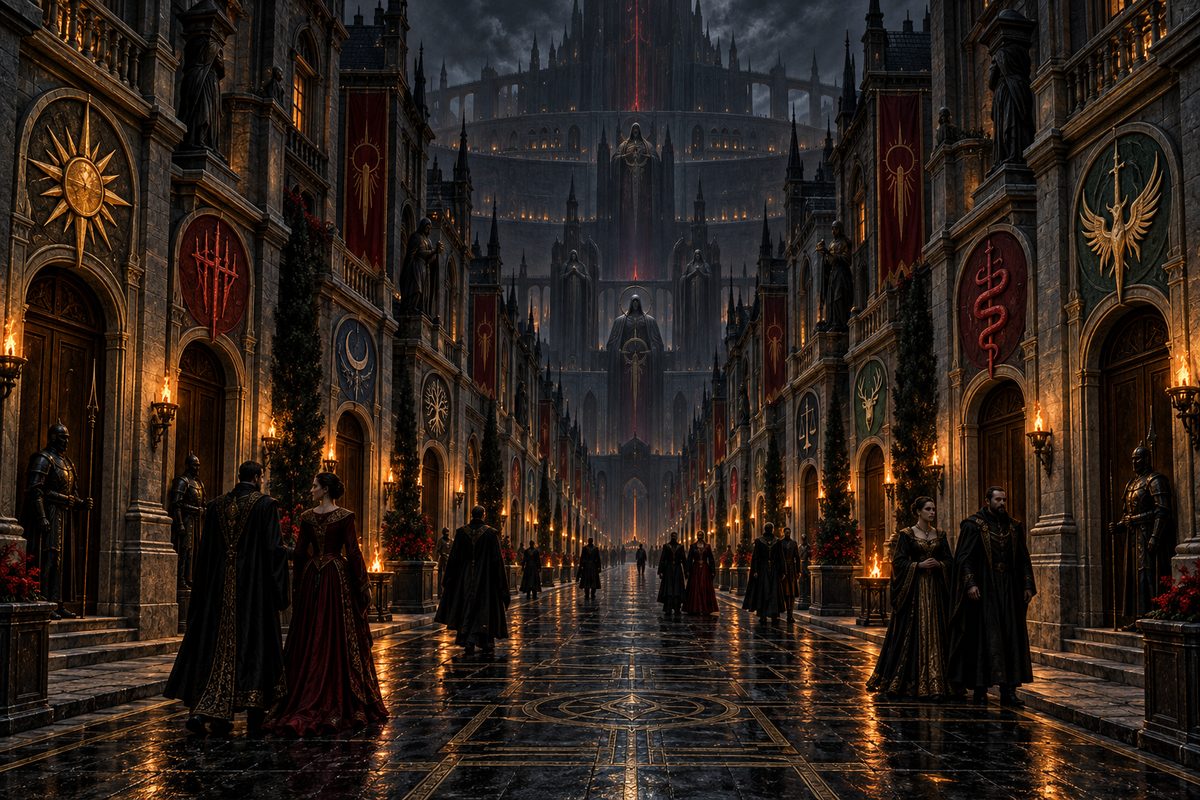
Professionals, mid-tier delvers, faction operatives, and the merchant class. Clean streets. Faction emblems above every door. If you live here, you're in debt, but you're managing it. This is what most people aspire to.
The Warren
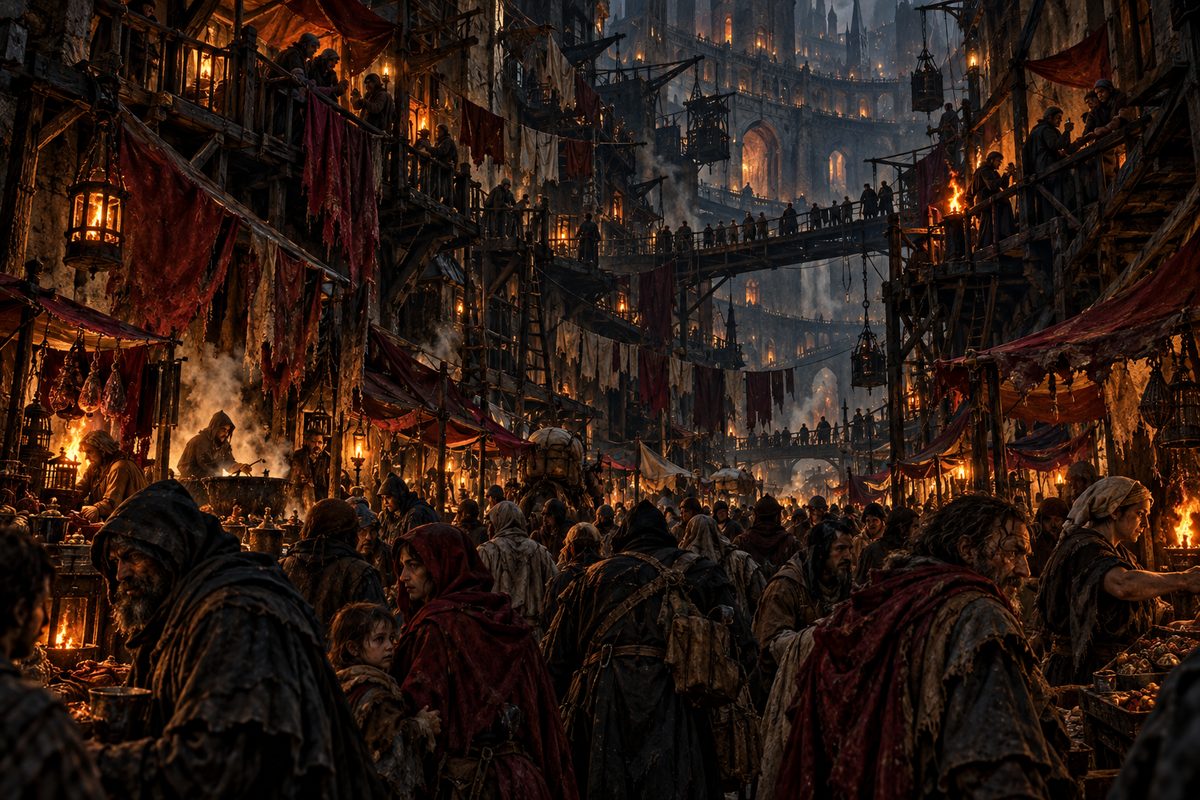
The bulk of the city. Overcrowded, layered, half the buildings repurposed three times over. Most residents here are in chronic debt — servicing interest without ever touching principal. The black market starts here.
The Throat
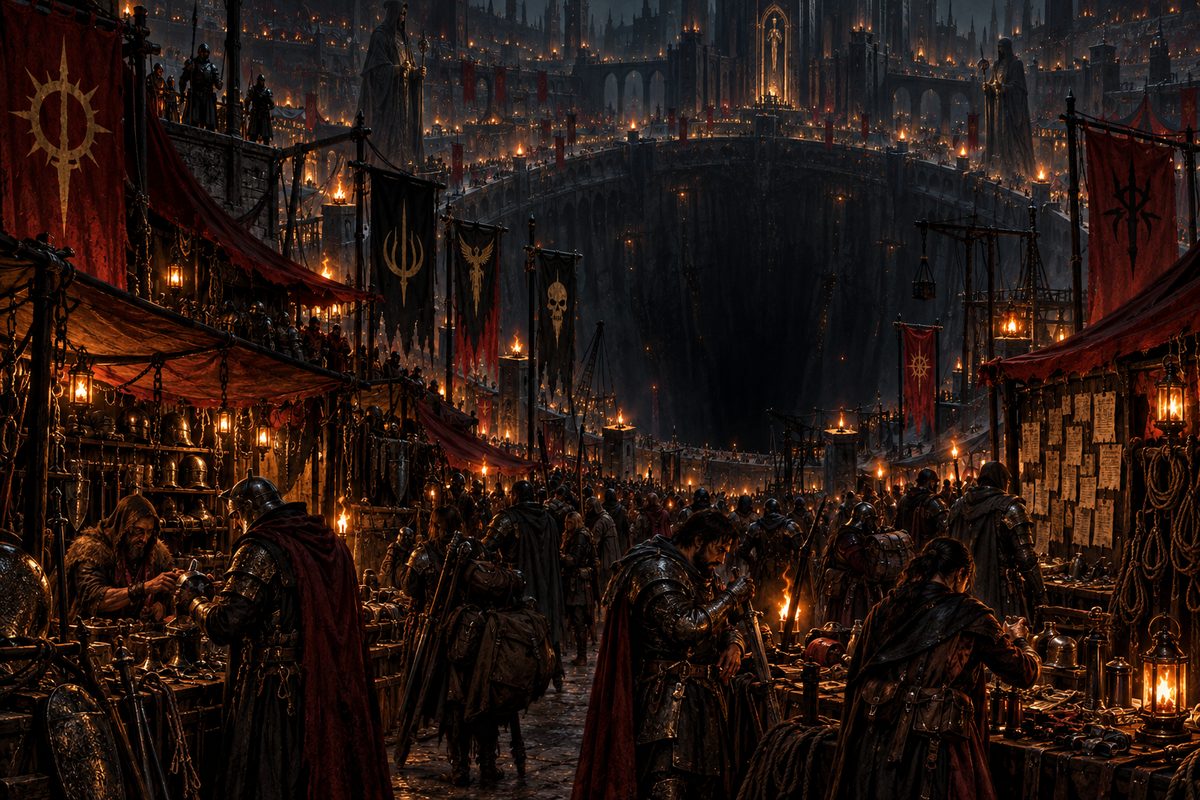
The district surrounding the Delve entrance. Staging areas for delvers. Gear shops. Bounty boards. Bars full of people who may be dead by morning. The most profitable and most violent district in Sanctum. Every faction wants a piece of it.
The Underlip
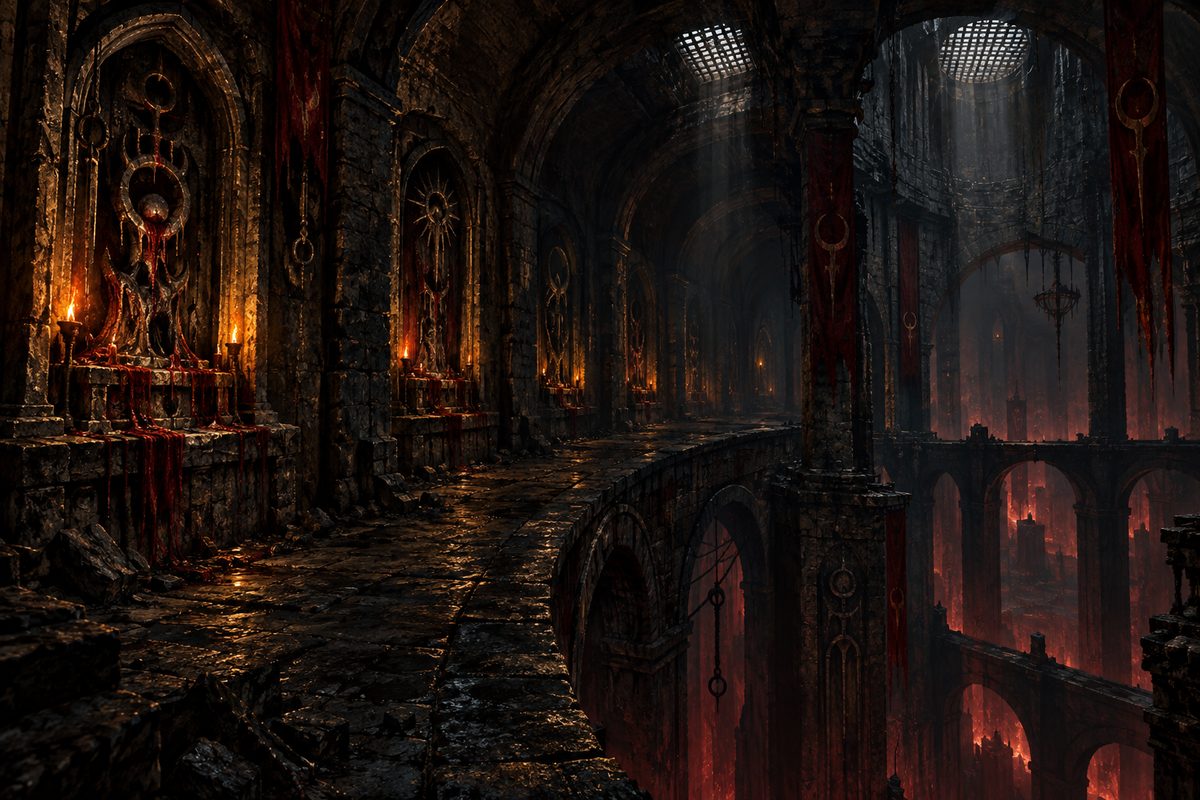
The borderless space between the city's foundation and the Delve's first floor. Some live here permanently — too poor or too wanted to surface. Ancient tunnels, forgotten shrines, and things that crawled up from the Delve and decided to stay.
The Gate of Tithes
There is one lawful way in and out of Sanctum, and it sits on the western wall where the Queen's Road arrives from Luton and the central farm towns. Everyone who enters this city for the first time enters here, and the gate is less a defence than an accounting office with battlements.
Three kinds of traffic come through it, and the gate treats each differently.
Bonded Factors
Licensed middlemen carrying the city's food and materials — grain from Hickory Hollow, Mirfield, Maplewood and Leeside; stone and metal from central Altair; western ore over the Luton pass; spice, perfume and textiles up by Sandgrave caravan; Ashheim spell components in from the eastern ports when the Pirate Captains permit. Independent merchants avoid Sanctum entirely, so the factors are the supply line. They pay a gate tithe, they hold the paperwork, and almost none of them live inside the walls.
New Residents
Anyone arriving to stay needs an Entry Sponsorship — a God's guarantee that they will not become the city's problem. One year's labour, gate tax ongoing, ledger opened on the spot. This is how most families' debt began three generations ago, and most of their descendants have never seen the contract. Default consequence: deportation, into a kingdom that will not shelter a debt-marked heretic.
Petitioners
People arriving with a body. Salt, Delve-ice, a hired cart, and everything they own already spent on the journey. They are the only arrivals the gate wardens process quickly, because the Crimson Pact pays a bounty for a fast transit and because there is a clock involved. They are directed straight down to the Vigil beneath the Mending House. See The Paired Ledger.
Leaving is a separate matter and a much shorter conversation. An active ledger in good standing may travel with a written release. An active ledger in arrears may not, and the wardens will know which you are before you reach the arch. Someone with no ledger at all — a raised person, most often — is not refused exit so much as quietly detained, because under the Gate Concord the Gods are responsible for what walks out of their city, and what walks out of this one is sometimes evidence of a capital crime.
Living in Sanctum
Daily life in Sanctum is defined by two questions: who holds your debt, and what do they want from you right now? Most people wake up, go to work in service of a God's operation, return home, and do not make trouble — not because life is good, but because making trouble is expensive. It generates attention, which generates miracles you didn't mean to need, which generates new debt.
The city is not orderly, but it is alive. The Warren has festivals and street markets and illegal gambling dens and whole neighbourhoods that have quietly decided to look after their own. The Throat has bars where delvers who probably shouldn't still be breathing buy rounds for strangers. There is crime, and there is danger, and occasionally something from the Delve surfaces somewhere it shouldn't — but these are the background of Sanctum, not its character. Its character is ambition. Everyone here is working an angle, nursing a plan, building toward something. The Gods didn't invent that hunger. They just figured out how to tax it.